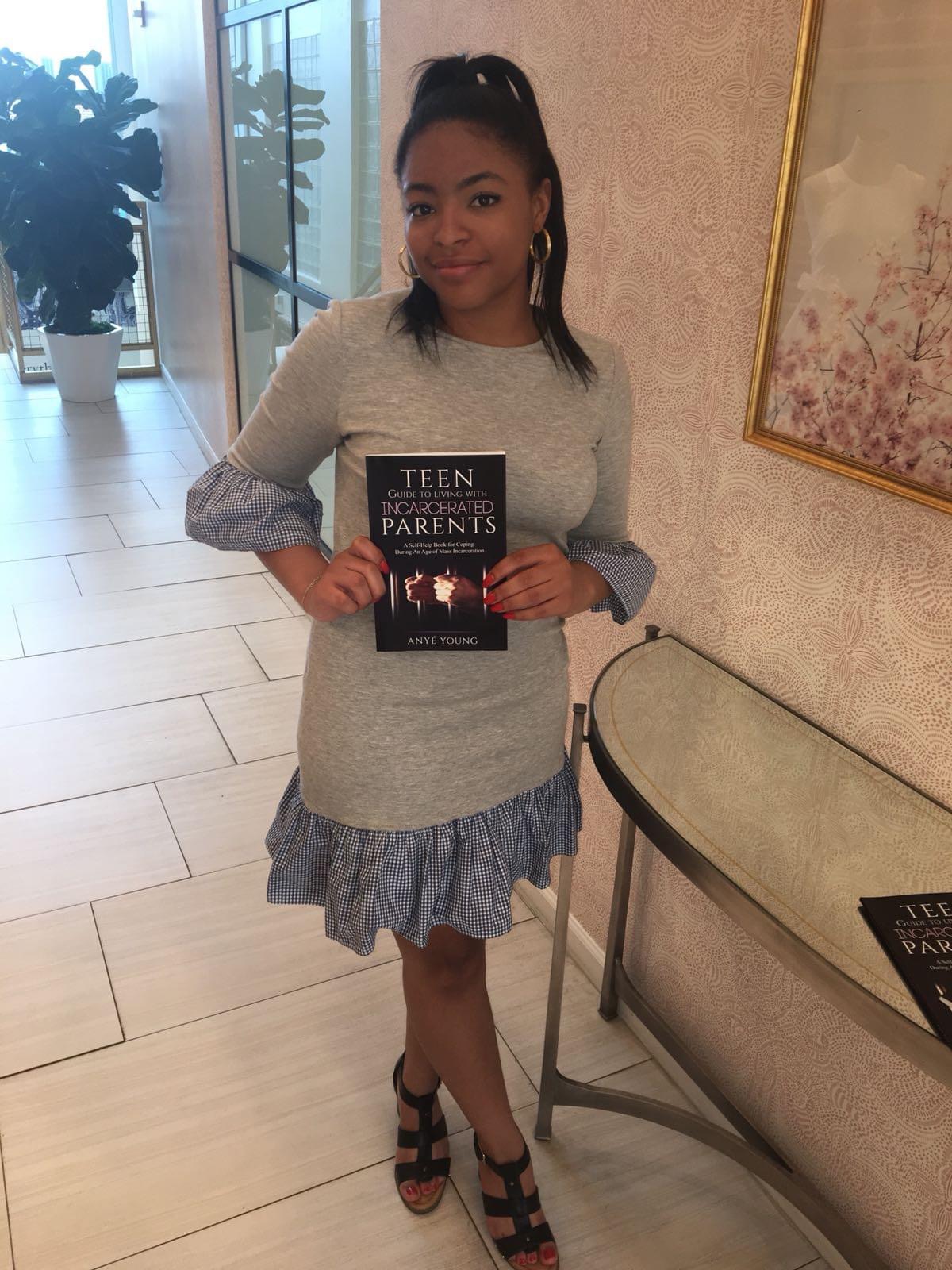

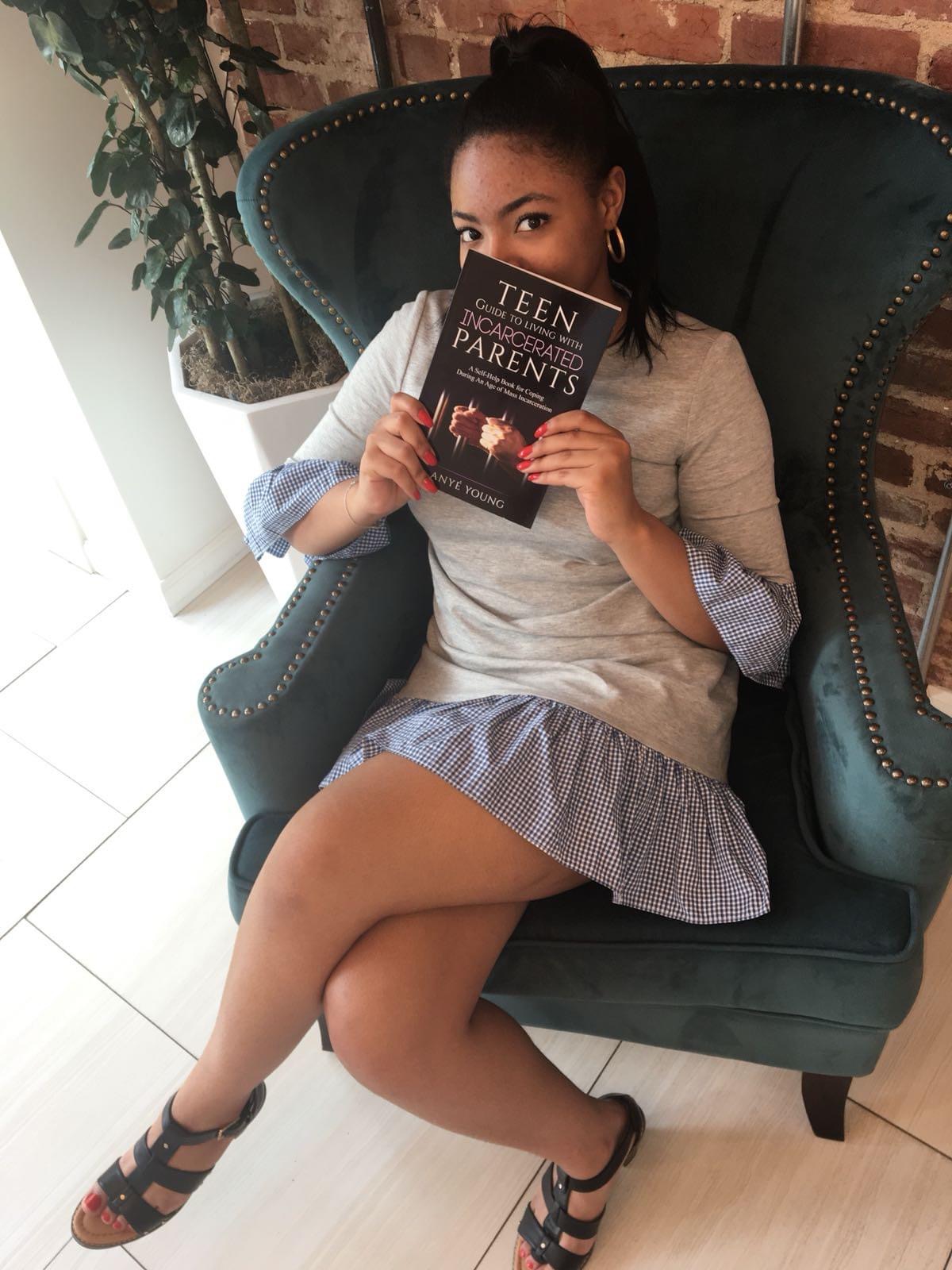
In November 2018, The Imprint — a national nonprofit newsroom covering child welfare and youth justice — published a feature on Anyé Young, then a teenager who had just written a book for young people living through a parent’s incarceration. The story, reported by Jeremy Loudenback, introduced readers to Teen Guide to Living With Incarcerated Parents: A Self-Help Book for Coping During an Age of Mass Incarceration, which Anyé wrote at 16 as a rising high school senior.
What the coverage was about
The piece traced how the everyday absence of a father shows up in small, ordinary places — a favorite arcade, a school event, a holiday — and how those moments are rarely accounted for by the systems around a family. It framed Anyé’s book as something practical rather than clinical: a short, plainspoken guide written by a teenager for other teenagers, in language a young reader would actually use.
Roughly one in fourteen U.S. children experiences the incarceration of a parent, yet very little published material speaks to them directly. That gap is the reason the book exists, and it is the reason the story resonated with caregivers, counselors, and youth-serving professionals when The Imprint ran it.
Why it mattered to MFGP
Anyé’s book — and the attention it drew — is part of the origin story of My Fairy GodParents. What began as one family turning a private experience into something useful for other families became the foundation for our storytelling, caregiver support, and youth programming. The coverage helped confirm something we still build around: young people impacted by parental incarceration want honest information, not euphemism.

“Children of incarcerated parents are not a footnote in someone else’s case file. They are readers, writers, and experts on their own lives.
⌒ ∘ ∘ ∘
About the reporter
Jeremy Loudenback reports for The Imprint, a national nonprofit news outlet covering child welfare and youth justice, where his work has focused on childhood trauma and the children affected by the systems that surround their families. The reporting, writing, and editorial judgment in the original article are his and The Imprint’s — MFGP claims no credit for them.
The difference this makes
If you found this page while looking for the book, Anyé’s Teen Guide to Living With Incarcerated Parents is available on Amazon. If you are a caregiver, a teen, or a professional supporting a family through incarceration, our free guides cover the practical questions that come next — visitation, staying in touch, kinship care, and scholarships.